


How Mad Honey Differs From Regular Honey?
If you are new to himalayan cliff honey, the simplest way to understand it is side by side with the honey you already know:
Recommended Offers


Your Cart is Empty
Recommended Items
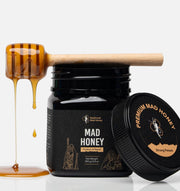
Mad Honey - Try Pack
Net Weight: 250g | 8.8oz
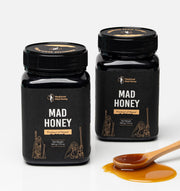
Mad Honey - Large Pack
Net Weight: 1000g | 35.3oz
Mad Honey Lip Balm - Green tea
Net Weight: 15g | 0.5oz
The health benefits of Mad Honey is a primary trigger for wellness communities and holistic health seekers while the recreational use is secondary one. This wild honey sourced from Rhododendron Flowers and some other wildflowers have been used as a traditional medicine for a long time. The Mad Honey has been well known in the Gurung ethnic community of Nepal as well as in some regions of Turkey as a tonic for restoring several health alignments. With 100% organic and high nutritional value the cliff honey has been known as a rare traditional honey valued by Himalayan communities. This has further sparked the growing interest and the demand along with the use for this product is inclining.

There are several active ingredients present in rhododendron honey that has a long history of traditional use, and some early research has explored its natural compounds. The major active natural ingredients that collaborate together to offer health benefits of Cliff Honey are :
Rich in phenolic compounds, cliff honey fights free radicals, potentially reducing chronic disease risk
Grayanotoxin and flavonoids may ease inflammation, helping with joint pain or soreness.
Soothes the stomach and may reduce bloating or indigestion.
Natural sugars and grayanotoxin traditionally associated with energy and vitality, ideal for active lifestyles.
Small doses promote calm, aiding stress relief
Rhododendron Honey is not different in terms of health benefits as compared to regular honey. Here are some claimed medicinal properties of Wild Honey that can be beneficial for health.
Like other types of honey, Wild Honey fights against bacteria known as staphylococcus aureus. The application of honey can prevent bacterial growth and has shown antibacterial activity in some studies.
The bioactive compounds present in Wild Honey can inhibit pro-inflammatory enzymes such as LOX, COX, and iNOS. Thus reduces inflammation, swelling and promotes quick healing
A study showed that wild honey has an apt content of antioxidant and anti-inflammatory properties that can promote improved wound healing in diabetic rats.
Natural honey has demonstrated effectiveness against specific viruses, particularly influenza, leading to interference with viral replication or elevating the response of the immune system to infection.
The Grayanotoxin present in wild honey widens the blood vessels and increases the blood supply hence reducing the blood pressure and offers calming effects.
Some studies on rhododendron honey have reported antioxidant and antimicrobial activity, but results vary by floral source, region, and honey composition.
Nepali tradition holds deep respect for ancestral foods and the Gurung, some of Nepal's hardiest hill people, are a living example. While hunting honey for their livelihood, they also long consumed what they harvested. Their first-hand experience is one reason mad honey earned its reputation.
Gurung hunters reported better digestion with regular small use. Enzymes in mad honey nepal aid nutrient absorption, while raw rare honey from nepal contains prebiotics that nourish beneficial gut bacteria, and its antibacterial action may help with conditions like gastritis.
In a research study, the grayanotoxin in honey significantly enhanced fracture healing within only 30 days due to its positive effects on the nervous system, bone metabolism and vascularity in the fracture area. Also, the research concludes that the Gurung preferred paste of Himalayan wild honey that normal regular honey as the regular honey showed less significant improvement in fracture healing. The gurungs also stated that honey was excellent home remedy for open wounds as the antibacterial anti-oxidiant property helped heal wounds faster.
The Gurung associated Himalayan wild honey with heart health. Research supports a plausible mechanism: grayanotoxins can trigger vasodilation, temporarily lowering blood pressure and improving circulation. Because therapeutic and toxic doses sit close together, this should only be explored with medical guidance.
With its anti-inflammatory action, rare honey has traditionally been stirred into herbal tea to calm coughs and sore throats. The same mild, calming effect was valued for easing everyday tension.
Infamously known as the aphrodisiac honey, it has been traditionally associated with vitality and stamina, but strong human evidence is limited. In the past, the Gurung males used to consume it to gain stamina to last longer during sexual intercourse. Also, some studies show that it increases sperm quality and quantity in men.
Gurung people have traditionally used rare honey has traditionally been used for blood-pressure-related wellness, but it should not be used as a treatment or replacement for prescribed medication and stressful situations because it has been helpful for them to reduce pressure. Scientists have confirmed that the grayanotoxins contained in mad honey trigger vasodilation of blood vessels while simultaneously improving blood circulation. The effect of lowering blood pressure offered them calmness and a feeling of euphoria. Thus, mad honey worked as a mild sedative which was traditionally used for blood-pressure-related wellness, but it should not replace medical treatment and stress.
Cliff honey's benefits and its risks come from the same compound. Traditional use is a very small amount; roughly half a teaspoon (about 5 g) or less, taken occasionally. The gap between a helpful dose and a harmful one is narrow, and too much can cause grayanotoxin poisoning (dizziness, nausea, low blood pressure, slow heart rate).
To use mad honey safely, keep these points in mind:
Before purchase, confirm whether mad honey is legal in the place you live.
Begin with the smallest possible amount, follow our dosage guidelines; never exceed the daily limit.
Always buy from sellers with authentic sourcing. Going for lab-tested, verified products means you’re avoiding adulterated or synthetic products.
Never combine mad honey with alcohol, stimulants, sedatives or other psychoactive substances.
If you’re confused because of medication or existing health conditions or pollen allergies.
The uses of mad honey fall into following broad groups: traditional and folk-medicine uses, culinary uses, and everyday wellness uses. In all three, the golden rule is the same- keep the amount very small.

The best benefit of mad honey is the presence of a rich set of antioxidants. Beyond this, mad honey benefits are more pronounced traditionally for wound healing, digestion and maintaining overall vitality.
Mad honey uses can be observed in three broad ways: traditional medicine (hypertension, digestion, coughs, pain, aphrodisiac), cooking (tea, warm milk, yoghurt, oatmeal), and everyday wellness (a small antioxidant boost and relaxation). It is always taken in tiny amounts.
Regular honey, the one we are familiar with, is naturally made from the nectar of common flowers while mad honey has nectar from exclusive alpine flowers like rhododendron.
Mad honey's use in traditional recipes has helped the native communities to maintain heart health but it is not a reliable long-term treatment for hypertension, and because effective and toxic doses are close together, it should not replace prescribed medication.
Pregnant or breastfeeding women, children, people with heart conditions or low blood pressure, anyone on heart, blood-pressure or sedative medication, and people allergic to honey or pollen. If unsure, ask a doctor first.
No. Some preliminary studies suggest rhododendron extracts might slow the growth of certain cancer cells, but this has never been shown to work in people. Do not use mad honey as a cancer treatment.
Traditionally, yes- taken in tiny doses for gut health. Laboratory studies show Rhododendron honey has antimicrobial activity, which may be relevant to gut health, though strong human evidence is still limited.
1. Silici, S. et al. (2010). Total phenolic content, antiradical, antioxidant and antimicrobial activities of Rhododendron honeys.
2. Aydın, Özge & Akbay, Ayşegül. (2025). Mad Honey and Its Possible Biological Mechanisms in Alleviating Chronic Obstructive Pulmonary Disease. Yüksek İhtisas Üniversitesi Sağlık Bilimleri Dergisi. 6. 55-60. 10.51261/yiu.2025.1692061.
3. Gunduz, A., Turedi, S., Russell, R.M., & Ayaz, F.A. (2008). Clinical review of grayanotoxin / mad honey poisoning, past and present. Clinical Toxicology, 46(5), 437–442.
4. Gunduz, A. et al. (2014). Analgesic effects of mad honey (grayanotoxin) in mice models of acute pain and painful diabetic neuropathy. Human & Experimental Toxicology.
5. Bilir, E.K. et al. (2018). Cytotoxic effects of Rhododendron extract on cancer cell lines (in-vitro). Kafkas Universitesi Veteriner Fakultesi Dergisi, 24(3).
6. Aryal, et al. (2025). Grayanotoxins in Mad Honey: Mechanisms of Toxicity, Clinical Management, and Therapeutic Implications. Journal of Applied Toxicology.
7. Ullah, S. et al. (2018). Mad honey: uses, intoxicating / poisoning effects, diagnosis, and treatment. RSC Advances, 8, 18635–18646.
8. ÖZTAŞAN, N, ALTINKAYNAK, K, AKÇAY, F, GÖÇER, F, & DANE, Ş (2005). Effects of Mad Honey on Blood Glucose and Lipid Levels in Rats With Streptozocin-Induced Diabetes. Turkish Journal of Veterinary & Animal Sciences 29 (5): 1093-1096.
9. Sahin A, Turkmen S, Guzel N, Mentese A, Turedi S, Karahan SC, Yulug E, Demir S, Aynaci O, Deger O, Gunduz A. A Comparison of the Effects of Grayanotoxin-Containing Honey (Mad Honey), Normal Honey, and Propolis on Fracture Healing. Med Princ Pract. 2018;27(2):99-106. doi: 10.1159/000487552. Epub 2018 Feb 11. PMID: 29428933; PMCID: PMC5968227.
10. Gül, Kutluhan & Gül, Tuba & Ülker Ertuğrul, Nazife & Şahin, Zafer & Bulmuş, Özgür & Pasli, Sinan & Demir, Selim & Tatlı, Özgür & Salihoğlu, Arif & Gündüz, Abdülkadir. (2026). Mad Honey Modulates Reproductive Hormones and Sexual Behavior in Male Rats. Bratislava Medical Journal. 10.1007/s44411-026-00681-4.