Skip to content
A special 10% off on your first order!
WELCOME10 | FREE SHIPPING 🌍
A special 10% off on your first order!
WELCOME10 | FREE SHIPPING 🌍
Medicinal Mad Honey

Nepal & Turkey: The True Origins of Authentic Mad Honey

Mad honey comes from two regions, Nepal and Turkey. The rare combination of environmental, botanical and zoological factors in these regions naturally creates the ecological conditions behind one of nature’s most fascinating hidden treasures.

The mountain ecosystems of these countries are home to specific rhododendron species containing grayanotoxins. The mountain honeybees forage and gather nectar from dense rhododendron blossoms and deposit trace amounts of naturally occurring compounds including grayanotoxin into the honey.

Only in Himalayan forests in Nepal

Mad Honey from Nepal:
A Taste from Himalayan Cliffs

Nepal is home to some of the highest mountain ecosystems on Earth, above 3500 metres, supporting more than thirty species of rhododendrons along with the world’s largest honeybee species, the Himalayan giant honeybees (Apis laboriosa). Regions including Lamjung, Gorkha, Mustang, Dolpa, Jajarkot, and Rukum are key source Himalayan areas of Nepal’s mad honey.

The history of mad honey in Nepal dates back centuries and remained largely limited to the native Himalayan foothill communities, especially Gurungs, Kulungs, Thakalis, Rais, and Lhopas. Living close to the cliffside hives, indigenous groups were the ones to discover the honey as a valuable food source in the remote corner where food availability was often limited.

Natives developed cliff-climbing honey-hunting technique, the only harvesting method used even today. Harvesting is done just twice a year but the fact that a single hive can contain hundreds of kilograms of mad honey makes Nepal one of the leading producers globally. Once unknown outside native communities, global media and visitors popularized mad honey and the hunting process.

Mad Honey from Turkey:
A Taste of Anatolia

Turkey’s Black Sea region, especially the Kaçkar Mountains, is a historic origin of mad honey. The region is home to the European honeybee (Apis mellifera), including the subspecies Apis mellifera caucasica,  which forages on forests of rhododendron bushes such as Rhododendron ponticum. The humid mountain forests create natural conditions linked to the formation of the honey.

A unique aspect of Turkey’s mad honey is its deep historical record, with references spanning over 2,500 years. In 401 BCE, Xenophon documented Greek soldiers affected by it, while later accounts from the Mithridatic era describe similar encounters involving Roman forces under Pompey.

Today, Turkish mad honey production is managed by beekeepers and most of the harvest comes from provinces like Rize, Trabzon, and Kastamonu. The hives are man-made and are often secured in trees, helping protect the honey from external disturbances. Although production is limited, it remains well known in local markets.

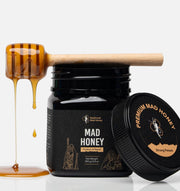
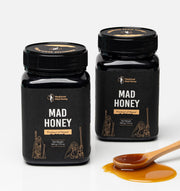
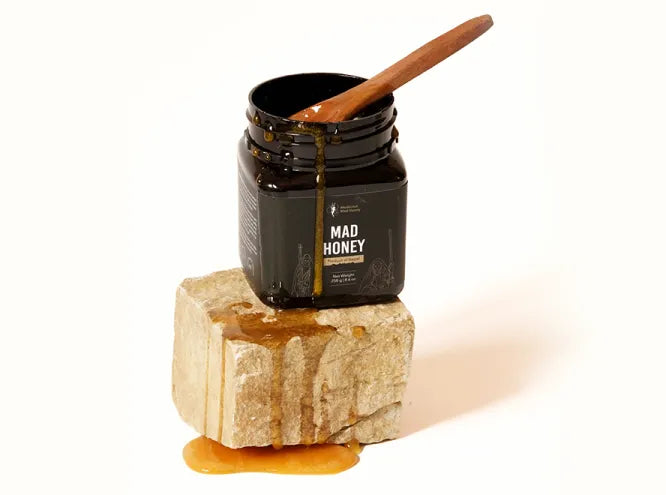
Our Best Seller Authentic Mad Honey from Nepal | Try Pack Size: 250g | 8.8 oz.

Premium Mad Honey is a rare and natural honey harvested from the mountainous regions of Nepal and Turkey, derived from Rhododendron flowers. It is traditionally recognized for its distinctive botanical composition and naturally occurring grayanotoxins.

mad honey from nepal try pack Features

Premium mad honey product nepal origin from medicinal mad honey brand

How is Mad Honey Made?

Mad honey is made by honeybees that collect nectar primarily from certain species of rhododendron flowers, which contain grayanotoxins. Here is how the simple nectar is converted into the world’s most distinctive and geographically limited honeys.

Purple Rhododendron for Mad Honey Nepal

Step 1

Bee Foraging: Nature’s Treasure Hunt

In areas where rhododendrons grow, especially in the mountains of Nepal and Turkey, bees actively gather nectar. Grayanotoxin is also collected at the same time from the specific rhododendron species along with the floral sugars and other floral nutrients.

A bee collecting nectar from pollen of wildflower

Step 2

Processing Nectar: The Secret Magic of Honey Making

Once collected, bees return to their hives and place the nectar into honeycomb cells. Through a careful process of regurgitation, enzymatic processing and hydration, the nectar transforms into the thick, golden honey we know.

A bee collecting nectar from a flower

Step 3

Grayanotoxin Concentration: A Defining Natural Feature

As the bees convert nectar into honey, the grayanotoxin collected while foraging is also deposited in trace amounts. The presence of grayanotoxin gives mad honey its unique qualities and its level varies by batch and season.

Apis Laboriosa the Himalayan giant bee

Step 4

The Thrill of Harvesting: A Journey to Collect Mad Honey

Mad Honey is harvested from hives found in high-altitude areas. Skilled honey hunters often scale cliffs to reach natural wild hives, while in Turkey, it is more commonly collected from hives intentionally placed by beekeepers.

Key Characteristics of Mad Honey

The buzzing honey is set apart from the rest of the delicacies because of its special features. Discover the defining characteristics historically associated with this rare mountain honey.

Product From the Himalayas

Grayanotoxin is one ingredient that comprises the eccentricity of the honey. The rhododendron flowers contribute to the psychedelic effects of honey. It is the only honey known to soothe nerves and alleviate stress, keeping you at ease and peace.

Naturally Harvested

Following an old-age tradition passed down from their ancestors, the Gurung community hunts for honey without any additional tools. As a result, mad honey is 100% pure without any additives.

Limited Harvest

Spring and autumn are two times when the collection of authentic honey is favorable. Plus, only mature hives are harvestable. Because of this, only tens to hundreds of hives are harvested annually, making mad honey availability rare.

Borrowed from Nature

Immensely skilled honey-hunting artisans collect the rare honey from the lap of nature. It is an amalgamation of pristine mountains and the essence of the wild. Each drop of mad honey speaks volumes about its origin that is truly innate to nature.

Harvested Like No Others

The journey of harvesting honey from hive to jar is an outcome of unwavering dedication. Our fearless honey hunters scale the steep mountain cliffs with traditional equipment to reach the hives. The whole process is a remarkable sight to witness.

Mad Honey Hive

Icon Description

Fearless Gurungs

The story of a hunter in the Gurung community starts from his childhood. He follows his father, grandfather and uncles to the Himalayan harvesting sites for decades. He learns while witnessing and the day comes when he is finally ready to take the lead himself. This way, the required skills are learned through observation and practice and the tradition is effortlessly passed down through generations.

Icon Description

Giant Nectar Loving Honeybees

Apis laboriosa or as the locals call it, “The Himalayan Giant Honeybee”, is the world’s largest honey bee species that builds hives in the mountain forests. Their giant colonies store litres of honey in a single hive and guard it dearly. Gurungs use specific local plants to disorient the bees during the harvesting window. This way, harvesters save themselves from the attack of the bees.

Icon Description

Harvesting Mad Honey in Nepal

Only native communities are allowed to harvest mad honey. They locate and select the mature hives first. The tradition then begins with rituals. Dates have to be fixed by the community priest and climbing tools have to be prepared by the skilled members of the community. On the day of harvest, mountain gods have to be pleased with prayers and offerings. After this, the actual harvesting begins.

Chemical Composition of Mad Honey

Like any natural honey, mad honey contains a mixture of floral sugars, antioxidants, vitamins and minerals. The main compound that makes mad honey stand apart is grayanotoxin limited to plants under the Ericaceae (family of rhododendrons).

Honey is one of nature's oldest superfoods and mad honey has long held a similar place among indigenous mountain communities. Added to what’s in normal honey, it has unique antioxidants from higher altitudes and rich botanical profile from one of the untouched terrains of the world.

As most of the users are new to this product from one of the remote corners of the world, starting slow is recommended. Always begin from a teaspoon and shift towards one tablespoon so that the body adapts more comfortably to its naturally occurring compounds.

Ingredients of mad honey on a bottle of mad honey from medicinal mad honey