




"Raw" is one of the most used words on a honey label and one of the least understood. It tells you how a honey was handled- not where it came from, whether it is organic, or whether it is better for you.
This guide covers what raw honey actually is, how it differs from regular, pure, unfiltered and organic honey, what the research does and does not support, and how to choose a good jar. The second half turns to the best raw honey by purpose, and how we evaluate it.
Quick Answer
Raw honey is honey that reaches the jar with minimal processing after it is extracted from the hive. It is typically strained to remove larger pieces of wax and debris, but it is not heavily heat-treated or ultra-filtered. Its color, flavor, texture and composition vary naturally with floral source, geography, season and handling.
Raw Honey at a Glance
|
Question |
Answer |
|
What is it? |
Honey with minimal processing after extraction |
|
Same as unfiltered honey? |
Not necessarily |
|
Always organic? |
No |
|
Can it crystallise? |
Yes, this is normal |
|
Does crystallisation prove purity? |
No |
|
Ingredients |
Honey only |
|
Safe for infants? |
No, no honey of any kind before 12 months |
|
Does composition vary? |
Yes, by floral source, region and harvest |
What Is Raw Honey?
Raw honey is honey as it exists in the comb, extracted and strained without added heat or fine filtration. "Raw" describes processing, not botanical origin: a raw honey can be clover, wildflower, buckwheat or Mānuka.
There is no legal definition of "raw" honey in the United States. Industry bodies describe raw honey as honey obtained by extraction, settling or straining without added heat. Because the term is not regulated, one producer's "raw" can mean something slightly different from another's which is why processing disclosure on the label matters.
How Is Raw Honey Made?
Extraction from the honeycomb
Beekeepers remove capped frames of honeycomb, slice off the thin wax cappings and spin the frames in a centrifugal extractor, which throws the honey out of the cells. In wild harvesting, such as cliff honey in Nepal, the comb is cut and pressed or drained instead.
Straining
The extracted honey is passed through a coarse strainer or left to settle so that wax particles, bee parts and debris rise or are caught. This removes visible debris but leaves much of the fine pollen in the honey.
Bottling and minimal processing
Raw honey is then bottled, usually at or near hive temperature. Some producers warm it very gently so it flows into jars; practices vary, which is why the words on the label and the producer's own explanation matter.
Raw Honey vs Regular Honey
Is raw honey better than regular honey?
Raw honey keeps more of the enzymes, pollen and aroma compounds that heat and fine filtration reduce, and it usually tastes more distinctive. Nutritionally, both are mostly sugar, and the differences are modest. Raw is a difference in processing and character, not a health upgrade.
|
Factor |
Raw honey |
Regular (processed) honey |
|
Processing |
Extracted, strained, bottled |
Heated, filtered, often blended |
|
Filtration |
Coarse; removes wax and debris |
Fine or pressure filtration for clarity |
|
Heat |
Little or none |
Heated to slow crystallisation and ease bottling |
|
Pollen |
Much of it retained |
Reduced; ultra-filtration removes most |
|
Enzymes |
More retained |
Reduced by heat |
|
Taste |
Varies with floral source |
More uniform |
|
Texture |
Often cloudy; crystallises sooner |
Clear; stays liquid longer |
Why Heat Matters
Heat slows crystallisation and makes honey easier to bottle, but it also reduces heat-sensitive enzymes such as diastase and glucose oxidase, and raises levels of HMF (hydroxymethylfurfural), a compound that forms as honey is heated or aged. HMF is one of the markers laboratories use to check how honey has been handled.
Why Pollen Matters
The amount of pollen in raw honey is too small to matter much nutritionally. Its real value is as evidence: laboratories can analyse the pollen in honey to help identify its floral and geographic origin. Ultra-filtration removes that evidence, which is one reason transparency-minded producers avoid it.
Raw vs Unfiltered vs Pure vs Organic
These labels describe different things. "Raw" describes processing, "unfiltered" describes filtration, "pure" means the product is only honey, and "organic" refers to certified production standards. A honey can be one without being any of the others.
|
Term |
What it tells you |
What it does not tell you |
|
Raw |
How the honey was processed |
Origin, organic status, quality grade |
|
Unfiltered |
How much filtration was used |
Whether it was heated |
|
Pure |
Only honey, not a honey–sweetener blend |
Whether it was heated or filtered |
|
Organic |
Produced under a certified organic programme |
Whether it is raw |
|
Local |
Geographic sourcing near you |
Processing or testing |
|
Single-origin |
A defined geographic or floral source |
Processing or testing |
What "raw" means
Minimal processing: extraction and straining, without added heat or fine filtration.
What "unfiltered" means
No fine filtration. Unfiltered honey may still have been warmed, so "unfiltered" alone does not mean raw.
What "pure honey" means
That the product is honey and nothing else. Under U.S. law, a product that contains added sweeteners must be labelled as a blend with those sweeteners declared, not sold simply as "honey". "Pure" says nothing about heating or filtration.
Does raw mean organic?
No. Raw and organic are separate claims. Bees forage over a wide area, so organic honey certification depends on the surrounding land and the certifying programme's rules. A honey can be organic and heated, or raw and not organic.
What Does Raw Honey Contain?
|
Component |
Typical share |
Notes |
|
Fructose |
About 38% |
The main sugar in most honeys |
|
Glucose |
About 31% |
Higher glucose means faster crystallisation |
|
Water |
About 17% |
Above roughly 20%, honey can ferment |
|
Other sugars |
Around 10% |
Maltose, sucrose and more complex sugars |
|
Everything else |
A small fraction |
Enzymes, acids, minerals, amino acids, pollen, polyphenols |
Does Raw Honey Crystallise?
Yes. Crystallisation is a natural process in which glucose separates from the water in honey. It is normal and harmless but it does not, by itself, prove that a honey is raw or authentic.
How fast a honey crystallises depends on its glucose-to-fructose ratio, water content, temperature and the tiny particles (like pollen) that crystals form around. Some raw honeys set within weeks; others, stay liquid for a long time. Processed honey also crystallises eventually, and honey mixed with syrup can crystallise too, so crystallisation cannot tell you which is which.
What Does Research Say About Raw Honey?
Much of the research on honey uses specific honeys or sterile medical-grade products, not ordinary raw honey from a shop. Each topic below carries an evidence label.
Antioxidant compounds
Honey contains polyphenols with measurable antioxidant activity. Amounts vary with floral source and processing, and lab activity does not establish health effects from eating honey.
Antimicrobial activity
Demonstrated in laboratory research, driven by low water activity, acidity and enzyme-generated hydrogen peroxide. Strength differs greatly between honeys, and activity in a dish is not the same as treating an infection.
Cough relief
A Cochrane review found honey may relieve acute cough symptoms in children better than no treatment or placebo. This applies only to children over 12 months, and the evidence concerns honey generally, not raw honey specifically.
Wound care
Evidence relates to sterile, standardised medical-grade honey products and dressings. Food-grade raw honey is not sterile and should not be used on open wounds or burns.
Digestion
Honey contains small amounts of oligosaccharides that may have prebiotic properties, but evidence for dietary raw honey improving digestive conditions is limited.
Blood sugar
A tablespoon of honey contains roughly 17 g of carbohydrate. Raw or not, it raises blood glucose and counts toward added sugars.
Seasonal allergies
Raw or local honey is often described as allergy relief. This is not established, and honey is not a substitute for allergy treatment.
Is Honey Adulteration Really Common?
Honey adulteration is real and the FDA continuously detects a subset of possible added sweeteners. Cane and corn syrups are some common added sugars, commonly used as undeclared added sweeteners in honey of different brands. For consumers, the practical lesson is that adulteration is detected in laboratories, not kitchens. That shapes how you should choose honey.
Is Raw Honey Safe?
For most people over one year old, raw honey is a safe food. There are a few important exceptions.
Allergies
People allergic to pollen or bee products can react to raw honey, which retains more pollen. Stop eating it if you notice itching, swelling or breathing difficulty, and seek care for severe reactions.
Sugar and blood glucose
Anyone managing diabetes or blood sugar should count honey as sugar and follow their clinician's advice.
General food safety
Honey's low water content keeps it stable, but keep it sealed and use a clean, dry spoon so moisture doesn't let it ferment. Honey that smells sour or has foam on top has fermented.
How to Choose Raw Honey
Evaluate a jar in this order. Each step tells you more than the one before.
1. Check the ingredient label
It should list honey and nothing else. Anything with added syrups must be labelled as a blend.
2. Look for geographic and floral origin
A named country and region and ideally a floral source are more meaningful than "product of multiple countries".
3. Check processing transparency
Does the producer say how the honey is extracted, strained and bottled, and whether it is heated?
4. Look for batch traceability
A batch or lot number lets a producer connect your jar to a specific harvest.
5. Look for testing where available
Some producers publish lab results for adulteration markers or quality parameters. Check they name the lab, date and batch.
How We Evaluate Raw Honey
|
Criterion |
What we check |
|
Source transparency |
Country, region and floral source named on the jar or producer site |
|
Processing |
Clear statement on heating and filtration |
|
Testing |
Published lab results or batch documentation, and what they cover |
|
Taste and texture |
Tasting notes, consistency and crystallisation on arrival |
|
Price per ounce |
Price paid divided by net weight |
What Is the Best Raw Honey?
There is no single best raw honey for every buyer. A good raw honey has transparent sourcing, minimal processing, clear labelling and, where relevant, credible batch or purity testing. The best choice then depends on whether you want mild flavor, bold flavor, everyday value, a specific origin or specialty characteristics.
How to Store Raw Honey
Store raw honey in a sealed container at room temperature, away from direct sunlight and moisture. Don't refrigerate it because cool temperatures speed crystallisation. Stored well, honey keeps for years.
Best Raw Honey to Buy in 2026
Knowing about how to choose a quality seller is what matters here. Whether you are choosing raw honey for everyday use or special occasions, some points to consider include:
What to look for:
-
"Raw" and "unfiltered" on the label, with honey as the only ingredient
-
A named country, ideally a region
-
A price per ounce you would be happy to pay every week
Specialty Raw Honey From Nepal
Medicinal Mad Honey is our own product. Get to know it here and judge it on its own terms:
What makes mad honey different
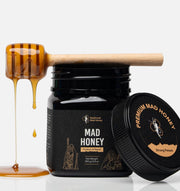
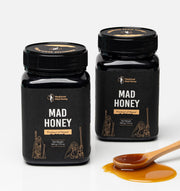
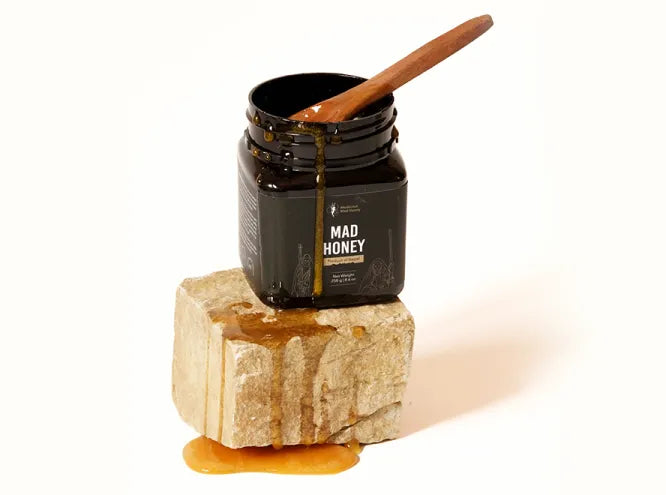
Our mad honey is a raw, small-batch honey from the Himalayan cliffs of Nepal, made by Apis laboriosa, the Himalayan giant honey bee, and harvested by hand by Nepali honey hunters using traditional rope-and-ladder methods. The bees forage on rhododendron and other alpine flowers, and harvests are seasonal. Each batch is recorded, tested in a Nepal government food laboratory and re-verified in the United States, and each jar carries a QR code linking to its batch record.
How to Store Raw Honey
Store raw honey in a sealed container at room temperature, away from direct sunlight and moisture. Don't refrigerate it; cool temperatures speed crystallisation. Stored well, honey keeps for years.
-
Keep it sealed. Honey absorbs moisture from the air, and too much water lets it ferment.
-
Use a clean, dry spoon every time.
-
To soften crystallised honey, stand the jar in warm water, not boiling, and ideally below about 40°C (104°F) and stir. Avoid the microwave, which overheats it unevenly.
Conclusion
Raw honey is handled as little as possible, extracted from the comb, strained and bottled without heat or fine filtration. That keeps more of its enzymes, pollen and character, but it does not turn into medicine, and “raw” says nothing about organic status or purity on its own.
Choose your honey by focusing on the label sticking to the jar. It should have honey as the only ingredient, a named origin, clear processing and a batch you can trace. Then finally you can choose the flavor you love. And never give honey of any kind to a baby under one.
FAQs
Q: What is the difference between raw and regular honey?
A: Raw honey is unprocessed- extracted and strained without added heat or fine filtration. Regular honey however goes through all these steps, making it lose heat sensitive nutrients like enzymes.
Q: Is raw honey healthier than regular honey?
A: Yes, if compared but not in. But all the heat-sensitive nutrients like enzymes and plant compounds are retained in raw honey.
Q: Is raw honey the same as organic honey?
A: No. Raw is about processing but organic is about certified production standards mainly following cchemical and pesticides-free honey making. A honey can be raw without being organic, or organic without being raw.
Q: Why does raw honey crystallize?
A: It's natural for glucose to separate from water in honey. In processed honey the glucose crystals are dissolved, which prevents early spread of crystals in the jar.
Q: Does crystallization mean honey is pure?
A: No. Both raw and processed honey crystallise, and blends can too. Crystallisation cannot confirm purity; laboratory testing can.
Q: How can I tell if raw honey is real?
A: The label says it all. Check if it lists only honey, names an origin, explains processing, and ideally carries a batch number with published testing. Don't rely on home tests such as the thumb, water or flame test.
Q: Can babies eat raw honey?
A: No. Babies should not be fed any kind of honey.
Q: Does raw honey expire?
A: Raw honey usually comes with best before date which is around 2 years. After that, the honey's quality may degrade with time.
Q: What is the best raw honey?
A: There is no single best. Look for transparent sourcing, minimal processing, clear labelling and credible testing and choose what best works for you: mild or bold flavor, everyday value, or your preferred texture.
References
-
Centers for Disease Control and Prevention. Foods and Drinks to Avoid or Limit (Infant and Toddler Nutrition). CDC.
-
https://www.ams.usda.gov/sites/default/files/media/AA20380_Honey.pdf
-
Oduwole O, Udoh EE, Oyo-Ita A, Meremikwu MM. Honey for acute cough in children. Cochrane Database Syst Rev. 2018 Apr 10;4(4):CD007094. https://doi.org/10.1002/14651858.CD007094.pub5


