


When most of us think of bees, we are instinctively bound to picture a jar of honey. But do all bees make honey? The answer to this is- No. A vast majority of bee species don’t prepare and store honey throughout their lifetime. Here’s the full story.
Do All Bees Make Honey?
No, not all bees make honey. Only around 5% of 20,000+ bee species found around the world make honey in meaningful quantities. The remaining 95% are solitary bees living in the wild throughout their lifetime and don’t need a honey deposit to survive. They wander around and survive on what’s available around them.
What Bees Make Honey?

Honey-making is a specialised behavior of only a handful of bee lineages. The process requires a special set of adaptations and behaviors and not all bees are equipped with these capabilities
Honey Bees (Main Honey Producers)
The commercially available honey is produced primarily by Apis.
-
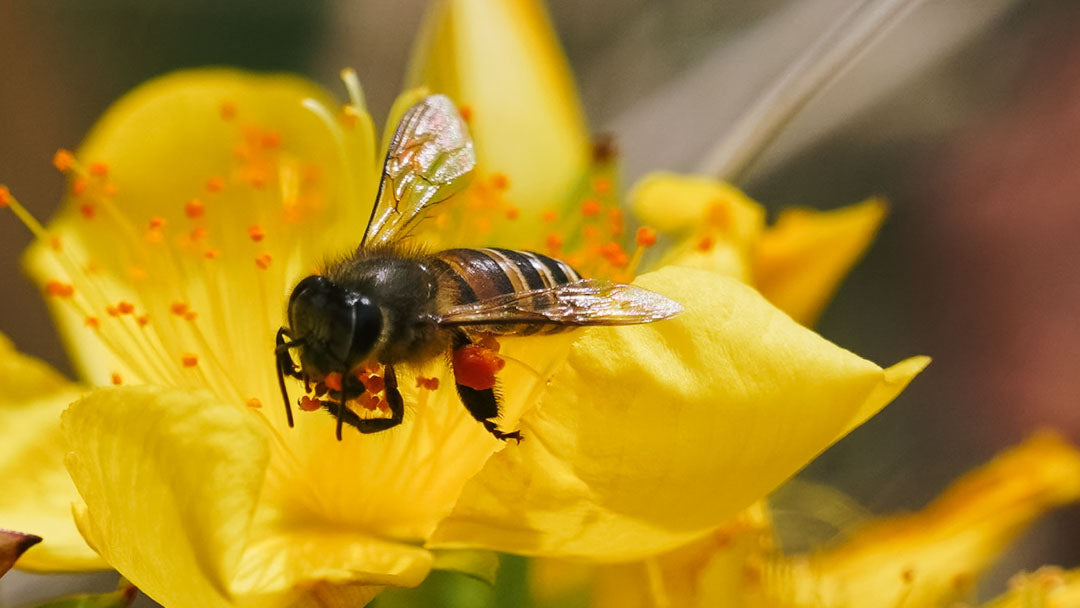
Apis mellifera: The commercial honey industry depends mostly on this species of honeybee to meet the global demand for honey. These bees are also known by the name of Western honey bee and are domesticated all over the world.
-
Apis cerana: This bee species produces a smaller yield of total produced honey. These species are highly adapted to the flora available across South and Southeast Asia.
-
Apis dorsata: A big honey bee species of the wild, these bees are commonly called the giant honey bee. Not to be domesticated, its honey needs to be harvested from the hives in trees or on cliff faces.
Stingless Bees (Tropical Honey Producers)
Beyond Apis, bees under stingless bee genera residing in tropical areas also produce honey, mainly Melipona and Tetragonula species. Unlike Apis honey combs, these bees store honey in a specialized structure called "cerumen pots". Raw honey produced by these species holds high value in indigenous communities for its medicinal properties as well as its unique tangy-sour taste.
Bumblebees (Small Amounts Only)
Bumblebees (Bombus spp.) do produce honey but too little in quantity. A typical colony deposits only a few grams of honey in the hive at any given time- nowhere near enough for human harvest. They prepare only a small amount because the colonies are annual and die off each autumn.
Bees That Do Not Make Honey
The overwhelming majority of bee species don’t produce honey and their short life cycle doesn’t even require a huge amount of storage. They select unique places to build nests and lay eggs like sand and ground and seal the nest with enough food for their small population of brood to survive.
Some of the most common species of bees not making honey include:
-
Carpenter bees: They lay eggs in the small nests which they prepare by boring into wood and creating tunnels.
-
Mason bees: Mason bees are known for utilizing pre-existing gaps in woods and hollow stems which they seal using mud after depositing eggs and enough nectar for the brood.
-
Leafcutter bees: Leafcutter bees find gaps and tunnels to lay eggs which they leave covered with pieces of leaves.
-
Mining bees: Similar to carpenter bees, they excavate tunnels in the ground where they lay eggs and leave nectar for brood survival.
-
Cuckoo bees: Unlike the above-listed bees, cuckoo bees do not construct nests. Their unique behavior lies in a parasitic relationship- they place their eggs in the brood cells of specific hosts.
Why Don’t All Bees Make Honey?
Honey production is a natural bee behavior. It falls among the highly specialized survival adaptation brought about by different interconnected factors, the most important one being a source of survival for large colonies during times of food shortages. Exactly opposite, honey does not need to be stored when there's no need for storage.
Solitary Lifestyle
The long list of bees not making honey is long and most of them are adapted to a solitary lifestyle. Female solitary bees live for an extended period during which they have to lay eggs, and leave enough food for their limited number of developing broods.
As her reproductive phase of life arrives, she finds and prepares a nesting site where she can store enough amount of honey inside the chamber with her eggs. She has tens of broods to feed, nothing like hundreds in a hive in the Apis species. Thus, there is no need to stockpile the food.
Short Life Cycle
Solitary bees live for only a year. They take about a whole year to turn into adults and survive for a few weeks as adults. In their developmental stages, they feed from what’s stored in the nest by their mothers and in the remaining adult phase of 3 to 8 weeks, they wander around and feed on what’s available. For such a short span of survival, food storage becomes irrelevant.
Limited Nectar Collection
Adult solitary bees need to collect nectar only for their short survival time. In the case of females, she needs to collect and store nectar only for her limited broods. About 20 foraging trips and she collects enough nectar for her offspring. The small colonial structure does not require solitary bees to store a huge amount of food for later use.
Small Nest Size
It has been observed that solitary bees find places like bare grounds, crevices in walls, south and east-facing banks of soil, hollow stems and wood where they make small, compact brood cells where a small number of offspring, around 10 to 30 in number, can fit. These nests in bare ground or in south-facing banks of stable soil, clay, sand or peat cannot store much honey due to their limited structural space and simple architecture.
Why Do Some Bees Make Honey?
For the bee species making honey, this behavior is all about a survival mechanism tied to colonial living. This mechanism is so advanced that the honey formed by the colonies has low water content and high sugar concentration- a property making honey stable throughout many years. As winter comes, the colonies- more than hundreds in number- can feed on this accumulated honey and this is how they sustain themselves through the flower-scarce months.
How Do Honey Bees Make Honey? (Brief Overview)
1. Nectar collection: As the peak blooming season arrives, the main motive of the whole bee colonies is to collect available nectar in optimum quantities. The amount stored during this season is for later use and totally determines the survival of the colonies during flower-scarce seasons.
2. Enzyme processing: The complex sugars collected while foraging are converted to simple sugars before being stored. Bee enzymes such as invertase, glucose oxidase and diastase are utilized for the processing.
3. Evaporation: The converted nectar has excess water that needs to be reduced for long storage. Bees in the hives fan the deposits to reduce the moisture content to 17-18%.
4. Storage in honeycomb: Thus, the obtained honey is storage-ready. The honeycomb cells containing the honey are now sealed with wax. The wax cap is chewed using mandibles when the colony needs to use the honey.
Do All Bees Make Honeycombs?
No, honeycomb is as specialised as honey itself. Here's how storage structures differ by bee type:
- Honey bees → Known for their iconic hexagonal comb
- Stingless bees → Builds small resin pots but not wax combs
- Bumblebees → Builds wax cups
- Solitary bees → Not known to build combs, rather, they construct individual nest cells in a linear progression.
Is All Honey Edible for Humans?
Only honey prepared by honey bees, Apis species, is practically used for human consumption. Stingless bees' honey is more of a specialty food among native users and is highly praised for its medicinal properties. Other bees like bumblebees produce limited honey and are not generally for human use.
Quick Comparison Table
| Bee Type | Make Honey? | Amount | Edible? |
|---|---|---|---|
| Honey Bees | Yes | High | Yes |
| Stingless Bees | Yes | Low | Yes |
| Bumblebees | Yes | Very low | No |
| Solitary Bees | No | None | No |
Common Myths About Bees and Honey
Myth: All bees make honey
When it comes to bees, we obviously think about honey-making insects. But, surprisingly, only 4 to 5% of over 20,000 bee species in the world are known for this property. The main bee species known for commercial bee production is Apis species.
Myth: All honey is the same
We, as customers, expect all the honey to have uniform sweetness, color and aroma. The reality contrasts with this expectation and the physical characteristics of any honey are defined by the floral sources from which bees gather nectar.
Myth: Wasps do not make honey
It’s true that wasps are mostly predators and carnivores and do not make honey, but there are exceptions. One of the known honey-producing wasp species is Mexican Honey Wasp, Brachygastra mellifica. These species make just a small amount of honey which they store for their survival purposes.
Importance of Non-Honey Bees
Pollination Role
The fact that more than a thousand bee species are not honey makers does not reduce their importance- they are the ones giving continuity to almost all the flowering plant species by supporting reproduction. They carry pollen grains between these plants which function as male gametes needed for successful fertilization and the formation of fruits and seeds.
Biodiversity
The flowering plants around the world are heavily pollination-dependent and the main agent that makes the whole process successful are insect pollinators. Honey bee species that do not make honey- over 80% make reproduction possible in these floras sustaining biodiversity around different types of ecosystems. Not only plants, they also indirectly support survival of other insects, birds, and wildlife that rely on these plants for food and habitat.
Ecosystem Balance
In addition, the ecosystem balance we have today is due to the contribution of non-honey bees. Their foraging behavior has kept plant life cycles, food chains and plant diversity preserved till now and will continue to remain protected. As the bees are simply trying to feed themselves and their broods, in the meantime, they are inadvertently supporting the functioning of the entire ecosystem and the species that depend on them.
Conclusion
The one-word answer to do all bees make honey is “No”. Among 20,000 bee species distributed in all the corners of the world, only 4 to 5% make honey. Most of the honey producers belong to the Apis species and are the main source of commercial production.
The rest of the bee species are dispersed in the wild and spend their entire life there. They have important duties in maintaining the ecosystem- they are the main insect pollinators of the native plants and help maintain the floral diversity in their own natural habitats.
FAQs
Q: Do all bees produce honey?
A: No. Not all bees produce honey. Among all species, only 4 to 5% can make honey that is commercially available in the market.
Q: What percentage of bees make honey?
A: The total population of bees is around 20,000 species, 4 to 5% can make honey and this small number is enough to meet all the demand at the commercial level.
Q: Which bees make the best honey?
A: Bees making the best honey belong to the Apis species like Apis mellifera, Apis cerana, Apis dorsata and Apis laboriosa, their production is what feeds the whole human population.
Q: Do wild bees make honey?
A: Most wild bees spend a solitary life, without a need to store honey for the whole colony. Some of the Apis species- honeymakers- are wild species as well like Apis dorsata and Apis laboriosa.
References
https://www.wildlifetrusts.org/sites/default/files/2017-12/ecxt.pdf