

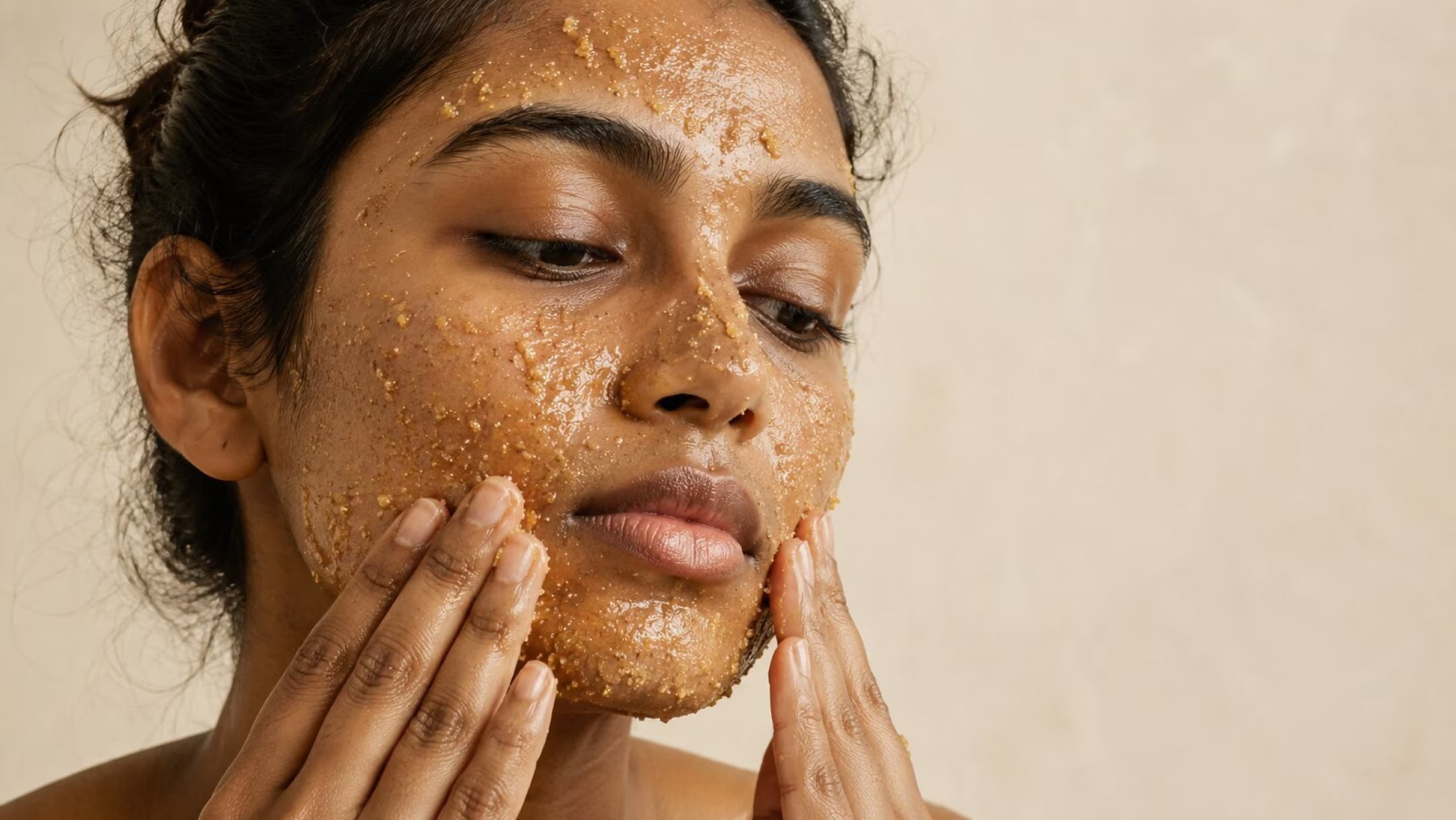
Honey can help moisturize and soothe skin because it acts as a natural humectant and contains antioxidant and antimicrobial compounds. However, benefits vary by honey type and skin condition. Evidence is strongest for moisturizing properties and for medical-grade honey in wound care, while evidence for acne, dark spots and anti-aging is more limited. This guide grades each claimed benefit and explains how to use honey on your face without irritating your skin, including which popular DIY combinations are worth trying.
How Does Honey Work on the Skin?
Honey's effects on skin come from a handful of properties, and understanding them explains both what it can do and where the limits are.
Humectant properties
Honey draws and holds water. Its high sugar content attracts moisture from the air and from deeper skin layers toward the surface, which is why it feels hydrating. This is the most consistently supported of its skincare properties, and the same mechanism glycerin works by.
Antioxidants and polyphenols
Honey contains phenolic compounds and flavonoids derived from the nectar source. These have measurable antioxidant activity in laboratory testing. Whether that translates into visible skin benefits when applied topically is a separate question, and a less settled one.
Glucose oxidase, gluconic acid and hydrogen peroxide
Bees add the enzyme glucose oxidase to nectar. When honey is diluted, such as on damp skin, this enzyme slowly generates small amounts of hydrogen peroxide and gluconic acid. This is the main source of honey's antimicrobial activity, and it is why heavily processed honey behaves differently from raw honey: the enzyme is heat-sensitive.
Why botanical origin matters
Honey is not one substance. Its composition varies with the flowers the bees visited, the region and the season. Dermatology literature reviewing honey's role in skin care notes that its properties and outcomes vary with botanical source [1]. A study showing an effect for one honey does not automatically apply to the jar in your kitchen.
7 Potential Benefits of Honey for Skin

Each benefit below carries an evidence label. They are not all equal.
1. Helps support skin hydration
The humectant effect is honey's most reliable skincare property. A systematic review of honey as a moisturizing ingredient in cosmetic formulations found promising results, though only five studies met its inclusion criteria, with three reporting relevant benefits and two producing non-significant results. Promising, but a small evidence base.[2]
2. May soothe dry or irritated skin
Many people find honey calming on tight or flaky skin, and its moisture-binding effect gives a plausible mechanism. Controlled clinical evidence specifically for soothing irritated skin is thin, so treat this as reasonable rather than established.
3. Has antioxidant properties
Honey's phenolic and flavonoid content shows antioxidant activity in laboratory conditions. What this means for skin appearance over time has not been well established in clinical trials, so antioxidant capacity should not be read as an anti-aging claim.
4. Has antimicrobial properties
Antimicrobial activity is well documented, driven by low water activity, low pH and enzyme-generated hydrogen peroxide. Antimicrobial strength varies considerably between honeys, and evidence of meaningful clinical benefits for the skin is still limited.
5. May support the skin barrier
By holding moisture at the surface, honey may help support barrier function. Direct clinical evidence measuring barrier outcomes from topical honey is limited.
6. Could help some acne-prone skin
The mechanism is plausible, but a randomised controlled trial of topical medical-grade kanuka honey for acne did not find statistically significant evidence that it outperformed the comparison treatment.[3]
7. Medical-grade honey has wound-care applications
This is where honey's evidence is strongest but it applies to sterile, standardised medical-grade honey products and dressings, not to honey from a jar. See the wound-healing section for why the distinction matters.
Is Honey Good for Acne?
Possibly, for some people but clinical evidence is limited and mixed, and honey should not replace established acne treatment.
Why Honey Might Help
-
Antimicrobial activity: plausible relevance to acne-associated bacteria
-
Anti-inflammatory properties: acne is an inflammatory condition
-
Moisture support: many acne treatments are drying, and honey does not strip skin
It is also important to know that some people also find honey irritating, and a minority will have an allergic reaction to it.
Can Honey Help Dark Spots or Acne Scars?
There is limited direct evidence that honey fades dark spots, and insufficient evidence that it removes acne scars. Hyperpigmentation and scarring respond to specific treatments and even more to consistent sun protection rather than to honey itself.
Two things get conflated here. Post-inflammatory hyperpigmentation is a flat dark mark left after a spot heals, and it usually fades on its own over months, faster with daily sunscreen. Acne scarring is a change in skin texture, a depression or raised area and no topical ingredient reliably reverses it.
Honey may help indirectly by keeping skin comfortable and hydrated while marks fade naturally. That is worth something. It is not spot removal.
Can Honey Help With Wrinkles and Skin Aging?
Clinical evidence for honey reducing wrinkles is limited. Its antioxidant content is often cited, but antioxidant activity measured in a laboratory does not establish visible anti-aging effects on skin.
Well-hydrated skin does look smoother, and fine lines appear less pronounced when skin holds moisture. That effect is real, immediate and temporary and is not a result of structural change.
If reducing visible skin aging is your goal, evidence-based options include daily broad-spectrum sunscreen, retinoids, and avoiding smoking, which you can discuss with your dermatologist to determine what is appropriate for you. Honey is a reasonable addition to a routine, not a replacement for any of those.
Which Type of Honey Is Best for Skin?
There is no single best honey for skin. Each type has different characteristics, and the right choice depends on what you want from it.
Raw honey
Retains more of its naturally occurring enzymes and compounds, since it has not been heated or finely filtered. This preserves glucose oxidase activity. The trade-off is that composition varies considerably between batches and floral sources, so effects are less predictable.
Medical-grade honey
Sterilised, standardised and produced specifically for medical use. This is the honey with real wound-care applications, and it is not the same as food honey with a medical-sounding label.
Commercial or processed honey
Heated and filtered for clarity and shelf stability. It still works as a humectant, but heat reduces enzyme activity, so antimicrobial properties are diminished.
Honey-containing skincare products
Formulated for cosmetic use, with preservatives, a suitable pH and a texture that rinses cleanly. Often the more practical option for regular use, and easier to build into a routine than a jar of honey.
How to Use Honey on Your Face Safely
Simple honey mask
1. Patch test first
Apply a small amount to your inner forearm and watch for reaction before using it on your face. See the safety section below.
2. Start with clean, slightly damp skin
Honey spreads more easily and dilutes slightly, which activates its enzyme activity.
3. Apply a thin layer
About half a teaspoon is enough for a face. Avoid the eye area.
4. Leave for 10–15 minutes
Longer is not better.
5. Rinse thoroughly with lukewarm water
Honey is sticky, so it’s best to rinse properly rather than just wiping.
6. Moisturize
A humectant works best when followed by something that seals moisture in. Once or twice a week is enough for most people.
Honey and colloidal oatmeal
For dry or reactive skin, mix honey with colloidal oatmeal(finely milled oats sold specifically for skincare) into a soft paste. Oatmeal is well tolerated and adds a soothing element without abrasion. Apply, leave 10–15 minutes, rinse.
Honey-containing skincare products
If you use a formulated product containing honey, follow the manufacturer's directions rather than the mask timing above. These are designed for specific contact times and concentrations.
How Long Should You Leave Honey on Your Face?
About 10 to 15 minutes, then rinse thoroughly with lukewarm water and follow with moisturizer. Leaving honey on longer does not increase the benefit, and leaving it on overnight is not recommended.
Honey does most of what it is going to do within the first ten minutes or so. Beyond that you are mainly increasing the chance of irritation and making it harder to rinse off cleanly.
Do not leave raw honey on overnight- as a spot treatment or as a full-face treatment. Extended contact raises the risk of irritation, honey attracts dust and lint onto skin as it stays tacky, and there is no evidence that longer contact produces better results.
What Not to Mix With Honey
Many popular DIY honey recipes include ingredients that can damage skin. These are the ones to leave out.
Lemon juice: It is far too acidic and including it in honey DIY can cause irritation, burning or uneven skin changes.[4] [5]
Coarse sugar and salt scrubs: The use of irregular, sharp granules can create micro-tears in facial skin. Physical exfoliation on the face should be gentle, using ingredients like colloidal oatmeal, if done at all.
Undiluted essential oils: Essential oils are common sensitizers and can cause contact dermatitis when applied neat. Honey does not dilute them adequately.
Baking soda: Highly alkaline, and disruptive to the skin's acid mantle. It is abrasive as well as pH-inappropriate.
A useful rule: if a DIY recipe promises fast, dramatic results, the active ingredient is usually the one irritating your skin. Redness after a mask is not the mask "working".
Honey for Different Skin Types
|
Skin type |
How honey may suit it |
What to watch |
|
Dry |
Humectant effect suits dry skin well; pair with a moisturizer after rinsing |
Always follow with an occlusive or moisturizer |
|
Oily |
Hydrates without adding oil; rinses clean |
Won't reduce oil production |
|
Acne-prone |
May suit some; non-stripping |
Evidence is limited; don't replace prescribed treatment |
|
Sensitive |
Often well tolerated as a short-contact mask |
Patch test carefully; stop if stinging occurs |
|
Combination |
Can be used across the face or on dry areas only |
Adjust frequency to how your skin responds |
Side Effects and Who Should Avoid Honey on Skin
Possible reactions
-
Allergic reaction: people allergic to bee products or pollen may react to honey on skin
-
Contact dermatitis: redness, itching or a rash at the application site
-
Irritation: stinging or burning, particularly on compromised or very sensitive skin
-
Clogged pores: usually from inadequate rinsing rather than the honey itself
Who should avoid it
-
Anyone with a known allergy to honey, bee products or pollen
-
Anyone with broken, weeping or infected skin: see the wound section below
-
Anyone whose skin has reacted to honey previously
How to patch test properly
A single 24-hour patch test is better than nothing, but it can miss delayed reactions. The American Academy of Dermatology's guidance for testing skincare products is more thorough: apply a small amount to a test area twice daily for seven to ten days before using it normally.[6]
You do not necessarily need a ten-day test for a rinse-off honey mask, but if you have sensitive or reactive skin, extending the test beyond 24 hours is worth doing as some contact reactions take several days to appear.
Honey and Wound Healing: Why Medical-Grade Honey Is Different
Do not apply ordinary raw or food-grade honey to open wounds or burns. Kitchen honey is not sterile. Wound-care evidence and clinical guidance refer to sterile medical-grade honey products and dressings which are regulated, standardised products, not the jar in your cupboard.[7]
This distinction matters more than any other on this page, and it is where a lot of honey skincare content goes wrong. Honey genuinely does have a recognised place in wound management. Wound-care guidance lists medical-grade honey among treatment options.
But medical-grade honey is sterilised, usually by gamma irradiation, standardised for antibacterial activity, and supplied as a regulated product or impregnated dressing. Food honey is none of those things and can carry bacterial spores including Clostridium botulinum that pose a real risk in an open wound.
For any wound that is deep or large, see a healthcare professional. Do not treat it at home with honey of any kind.
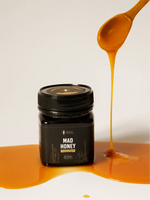
What About Mad Honey for Skin?
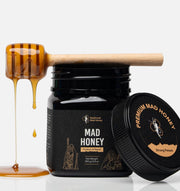
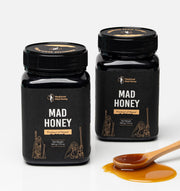
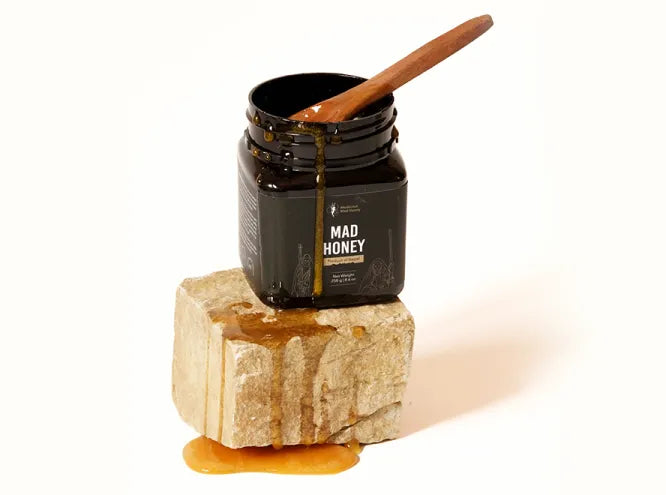
Mad honey is produced from rhododendron nectar and differs chemically from conventional honeys, because it may contain grayanotoxin which is a natural compound from rhododendron flowers. Research into honey in dermatology does not automatically establish that mad honey provides greater topical skincare benefits than other honeys. Specific clinical evidence for mad honey in skincare remains limited.
What mad honey shares with other honeys are the general properties described above: it is a humectant, it contains phenolic compounds, and it has antimicrobial activity. Those apply to honey broadly.
What Honey Cannot Reliably Do for Your Skin
Honey is frequently presented as doing all of the following. It should not be.
- Cure acne. There is no clinical evidence to support this.
- Permanently remove acne scars. Honey is not a reliable topical care for it.
- Erase dark spots. There is limited direct evidence.
- Shrink pores. Pore size is largely genetic and cannot be permanently changed by a topical product.
- Reverse wrinkles. Hydration temporarily softens their appearance; it does not reverse them.
- Replace sunscreen. Honey provides no meaningful UV protection.
- Replace dermatologist-prescribed treatment. For any diagnosed skin condition, follow your clinician.
- Treat infected wounds. Kitchen honey is not sterile and should not be used on open or infected wounds.
- What it can reasonably do: act as an affordable, well-tolerated hydrating mask for most people, once or twice a week. That is a genuinely useful thing for a jar of honey to do.
Conclusion
Honey is a good hydrating mask and a poor miracle cure. Its humectant effect is real, its antimicrobial and antioxidant properties are genuine, and medical-grade honey has an established place in wound care. Beyond that, the evidence thins out quickly.
Use it once or twice a week as a 10–15 minute mask, rinse thoroughly, and moisturize after. Skip the lemon, skip the sugar scrub, and don't leave it on overnight. For acne, pigmentation or ageing concerns, honey is a pleasant addition to a routine built on treatments that have been properly tested but not a substitute for them.
Frequently Asked Questions
Q: Is honey good for your skin?
A: It can be. Honey acts as a humectant and has antioxidant and antimicrobial properties, so it works well as a hydrating mask. Evidence is strongest for moisturizing and for medical-grade honey in wound care. Claims about acne, dark spots and wrinkles are supported by much weaker evidence.
Q: Can I put honey directly on my face?
A: Yes, most people can use plain honey as a short-contact mask. Patch test first, apply a thin layer to clean, damp skin, leave 10–15 minutes, then rinse thoroughly and moisturize. Avoid it entirely if you are allergic to honey, bee products or pollen.
Q: How long should I leave honey on my face?
A: About 10 to 15 minutes. Longer does not improve results and increases the chance of irritation. Do not leave honey on overnight: it stays tacky, attracts dust and lint, and there is no evidence that extended contact helps.
Q: Can I use honey on my face every day?
A: Once or twice a week is enough for most people. Daily use is not necessary and increases the chance of irritation, particularly on sensitive skin. If you want daily honey in a routine, a formulated honey-containing product is better suited than raw honey.
Q: Which honey is best for skin?
A: There is no single best. Raw honey retains more enzyme activity and suits general hydration. Manuka has the strongest antimicrobial research base but costs more. Medical-grade honey is for wound care. For a weekly hydrating mask, ordinary raw honey is perfectly adequate.
Q: Does honey help acne?
A: The evidence is limited and mixed. A randomised controlled trial of medical-grade kanuka honey found no statistically significant benefit over the comparison treatment. Honey may suit some acne-prone skin as a non-stripping hydrator, but it should not replace established acne treatment.
Q: Does honey remove dark spots?
A: There is limited direct evidence that honey fades hyperpigmentation. Post-inflammatory dark marks usually fade on their own over months, and daily sunscreen speeds that up considerably. Honey may keep skin comfortable meanwhile, but it is not a spot-fading treatment.
Q: Can honey remove acne scars?
A: No. There is insufficient evidence that honey removes acne scars. True scarring is a change in skin texture, and no topical ingredient reliably reverses it. Treatments that do work for scarring are procedural and require a dermatologist.
Q: Is raw honey better for skin than regular honey?
A: Raw honey retains more enzyme activity, including the glucose oxidase behind its antimicrobial effect, because it has not been heated. Both work as humectants. Raw honey varies more between batches, so its effects are less predictable than a standardised product.
Q: What are the side effects of honey on skin?
A: Possible allergic reaction, contact dermatitis, stinging or redness. People allergic to bee products or pollen should avoid it. Patch test before first use, and extend the test beyond 24 hours if your skin is sensitive, since some contact reactions appear days later.
References
-
Honey in dermatology and skin care: a review. PubMed.
-
Efficacy of honey as a moisturizing ingredient in cosmetic formulations: a systematic review of clinical trials. PMC.
-
Randomised controlled trial of topical kanuka honey for the treatment of acne. PubMed.
-
Health benefits of lemon juice: guidance on topical use. Cleveland Clinic.
-
How to prevent skin problems while gardening (citrus and sun exposure). American Academy of Dermatology.
-
How to test skin care products. American Academy of Dermatology.
-
Wound management advice and prescribing guidance: medical-grade honey. Oxford Health NHS Foundation Trust.