







Most people picture a honeybee when they think of bees. But the world's most important pollinators aren't living in managed hives , they're wild bees, and they outnumber domesticated species by orders of magnitude. Of the more than 20,000 known bee species globally, the vast majority are wild, free-ranging, and largely unknown to the general public.
Wild bees pollinate over 85% of the world's flowering plants and contribute to 35% of global food production. Yet their populations are declining at an alarming rate. The IUCN estimates that nearly 1 in 10 wild bee species in Europe alone face extinction.
This guide covers everything you need to know: what wild bees are, where they live, how they behave, which species are at greatest risk, and most importantly - what you can do to protect them.
Quick Facts: Wild Bees at a Glance
- 20,000+ species of bees exist globally - most are wild
- ~85% of all bee species are wild (non-managed) species
- ~70% of wild bees nest in the ground
- Wild bees pollinate over 80% of flowering plant species
- Nearly 1 in 10 European wild bee species face extinction (IUCN)
- 50% of leafcutter bee species and 27% of mason bee species are "at risk" (Xerces Society)
What are the Wild Bees?
These are the Bees living in the wild. They are called Wild Bees because they aren't domesticated by humans or managed by humans although the honey is harvested by some means. Their natural nesting sites and adaption to local environments has categorized them as the wild bees. They are not primarily known for honey although some varieties of honey are harvested from some types of bees,
Global Distribution of Wild Bees
Wild bees are the primary pollinators of the wildlife including trees, wild plants and wild crops around the world. Most of the bees, even the largest bee family Apidae have constantly adapted to varying environments of different regions.
The wild bees have a very wide distribution across various habitats and regions. However, some bees of wild families are limited and native to specific regions such as
- Stingless bees (Meliponini): They are the native bees of tropical and subtropical regions especially from Central/South America, Africa, Southeast Asia, Australia
- Mining bees (Andrena): These bees are believed to be native of North America and Europe
- Plasterer bees (Colletidae): Natives of Southern Hemisphere especially Australia and South America
- Sweat bees (Halictidae): Diversely found in dry and temperate regions of the Globe.
- Bumblebees (Bombus): Primarily found in temperate and cold climates of the Northern Hemisphere, though some species occur in South America and high-altitude tropical regions.
- Mason and Leafcutter Bees (Megachilidae): Global distribution with especially high diversity in the Americas, Europe, and Central Asia.
Male vs Female Wild bees
Female wild bees have a longer lifespan compared to males and their main role is to build nests for eggs and deposit enough pollen and nectar to feed the developing larvae. Female wild bees are the most hardworking and independent, as she has complex and control role in reproduction, nesting and survival of next generation. Once she completes all the responsibility in one nest, she leaves the nest and creates another one and the cycle repeats until her life span.
Drones popularly known as the Male Bees of the wild. Their main purpose is to mate the queen bee and immediately after mating they die because their reproductive organs are ripped from the body.
The males are biologically made for the sole purpose of mating. Even if they don't mate, or if they fail to mate at mating season they simply wander and die. The presence and purpose of male bees is temporary, however females have responsibilities to fulfill.
Nesting Behavior of Wild Bees
The majority of wild bee species are solitary, nomadic and usually don't live or spend their lives in hives. They have diverse nesting strategies based on the environment, species and life cycle for the purpose of survival and reproduction. Some behavioral traits of wild bees nesting are:
- Ground-nesting: Approximately 70% of the wild bees nest in soil because this habitat site offers protection, stable microclimate and evolutionary adaptation. The female bees dig narrow tunnels and lay eggs there to raise their young. Mining bees, sweat bees and plasterer bees are the common ones to live this way.
- Cavity-nesting: In this, female wild bees find already existing holes in woods, stems or other similar natural cavities and build brood cells in them. Mason bees, leafcutter bees, resin bees and small carpenter bees rely on pre-formed cavities for nesting.
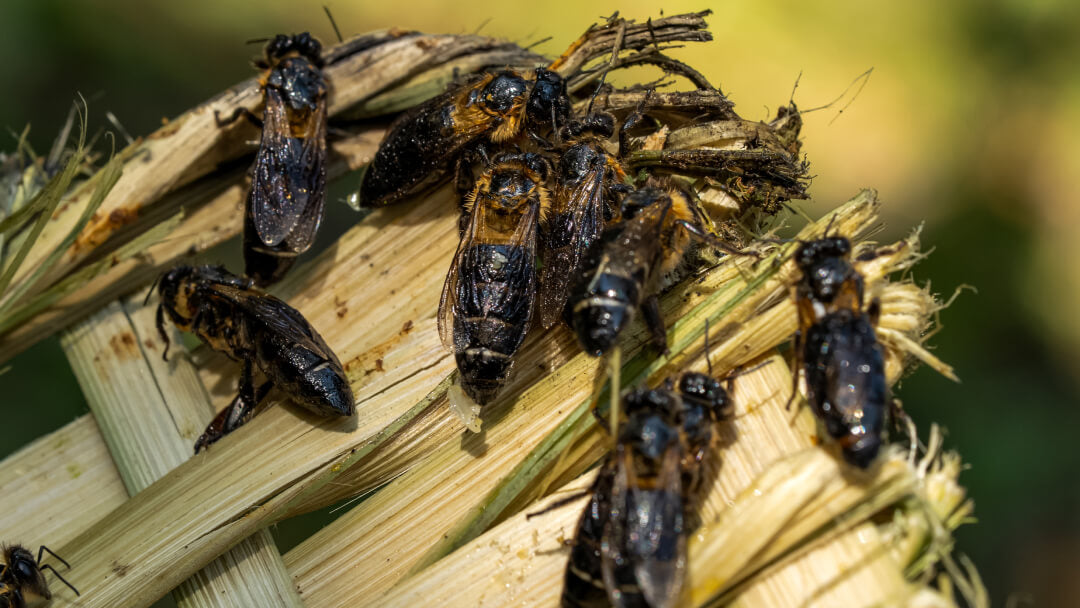
- Others: Wild bees mostly forage in forests and can build nests in structures like twigs, stems, mud or leaves, whichever resource is available around them. However, a unique bee species, Apis laboriosa, builds huge hives in forest cliffs and stores around 70 to 80 kgs of honey, widely known by the name of “Mad Honey”.
Wild Bees Classification on the basis of Social Structure
Wild bees display a wide range of social behaviors from spending their life alone to forming social groups and organized colonies.

Social behaviour
One of the bases for bee type categorization is the bee behavior, how they live and interact with one another. Based on this, bees are classified as:
Solitary bees: Over 90% of wild bee species are solitary. These are the least social bees and each female singly is decisive of the future of the upcoming generation. She builds up her own nest, gathers food, lays eggs and seals the nest without any help. The majority of the wild bees are solitary and don't form colonies; they love living freely in the wild.
With no queen and workers, there is also no division of labor. Some common types of solitary bees Mining bees (Andrena), mason bees (Osmia), leafcutter bees (Megachile), carpenter bees (Xylocopa).
Social bees (~250 Species): Unlike solitary bees, some wild bees of about 250 species live together in a shared nest. These bees form cooperative colonies and divide their responsibilities-some are collecting food, some guarding the offspring and the queen bee depositing eggs. Bumblebees, stingless bees and some species of sweat bees are among the ones that live this way.
Communal bees: This is not a cooperative kind of brood care, bees do share nesting space but in a different way. Multiple females work together to build the nest and when it comes to taking care of their brood cells, they function independently. Species of sweat bees, colletid bees and small carpenter bees are communal, completely different from the solitary and social ones.
Cuckoo/ Parasitic bees: Cuckoo Bees, similar to the parasitic nature of the famous cuckoo bird, don't raise their offspring themselves. Rather, they invade nests of other bees and lay eggs where the brood grows feeding on the stored provisions. Hence, these bees are adapted for stealth and survival and not for foraging or nest construction. Triepeolus, Epeolus, Stelis, Nomada and Sphecodes are some bees with Cuckoo-like behavior.
Types of Wild Bees: A Species Overview
Wild bees are classified into seven recognized families. Below is a reference guide to the most ecologically significant groups.
|
Common Name |
Family |
Behavior |
Distribution |
|
Bumblebees |
Apidae |
Social; 200+ species |
Worldwide except Antarctica |
|
Mason Bees |
Megachilidae |
Solitary; cavity-nesting |
North America, Europe, Asia |
|
Leafcutter Bees |
Megachilidae |
Solitary; leaf-cutting |
Global; most diverse tropics |
|
Mining Bees |
Andrenidae |
Solitary; ground-nesting |
North America, Europe |
|
Sweat Bees |
Halictidae |
Solitary to semi-social |
Global dry & temperate zones |
|
Stingless Bees |
Apidae |
Social; colonial |
Tropics: Americas, Africa, SE Asia |
|
Plasterer Bees |
Colletidae |
Solitary; ground-nesting |
Southern Hemisphere |
|
Carpenter Bees |
Apidae |
Solitary; wood-boring |
Global except colder regions |

Wild Bee Identification
Although there are several types of bees, anyone familiar with honey bees can easily identify the wild bees by their Size and Shape, Color Patterns, Wing and Behavioral Clues as well as foraging behaviors. Some examples include:
- Sweat bees: Smaller and metallic green/ black & attracted to sweat
- Mason bees: Metallic blue to green, no striped pattern and use mud nests
- Bumble bees: Larger in size; ranging from 15-25mm, very hairy, bold black and yellow banding
- Aggressive bee that live in the ground: Africanized Honey Bees(killer bees) are the most aggressive bees but they do not live in the ground. Ground-nesting bees, yellow jackets, however, are sometimes called aggressive bees, but in reality, they are a type of wasp.
- Himalayan Giant Bees: With size above 3.0 cm, these Bees are the giant bees of the wild and are found in the Himalayan Ranges.
Why Wild Bees Matter: Ecological Importance
The ecological importance of wild bees extends far beyond their role in honey production (which, for most species, is nonexistent). Their value lies in pollination - and the consequences of their decline ripple through entire ecosystems.
Flowering Plant Reproduction: Wild bees pollinate over 80% of the world's ~350,000 flowering plant species. Without them, the reproduction of countless plant species would fail - including many that form the structural backbone of forest and grassland ecosystems.
Food System Stability: Wild bees contribute to 35% of global food production. Crops including almonds, blueberries, squash, avocados, and many others depend heavily or entirely on wild bee pollination.
Wildlife Food Chains: The fruits and seeds produced after wild bee pollination are essential food sources for birds, mammals, and insects. A decline in wild bees triggers cascading effects up the food chain.
Genetic Diversity: Wild bees promote cross-pollination between distant individual plants, maintaining the genetic diversity that makes plant populations resilient to disease and climate change.
Ecosystem Services Valuation: The economic value of pollination services globally is estimated at $235-577 billion USD annually - the majority of which is provided by wild bees, not managed honeybees.
Wild Bee Population Decline: Causes and Scale
Wild bee populations are declining worldwide. According to the IUCN Red List, nearly 1 in 10 European wild bee species face extinction. In North America, the situation is similarly alarming - the rusty-patched bumblebee has declined by 87%, and populations of several specialist bee species have disappeared from large portions of their historic ranges.
|
Threat |
Cause |
Severity |
Impact on Wild Bees |
|
Habitat Loss |
Urbanization, agriculture |
Severely High |
Nesting & foraging sites disappear |
|
Pesticides |
Neonicotinoids, herbicides |
High |
Impairs navigation & reproduction |
|
Climate Change |
Shifting bloom times |
Growing |
Mismatches bee/plant life cycles |
|
Invasive Species |
Africanized bees, pathogens |
Moderate-High |
Displaces native species |
|
Monoculture Farming |
Loss of floral diversity |
Moderate |
Reduces pollen & nectar variety |
Wild Bees and Nectar collection
Wild Bees like normal honey bees collect nectar for the purpose of survival and reproduction. They collect nectar known as bee fuel containing Sucrose, Glucose and maltose for flight, foraging, nest building and more.
In wild these wild bees collect nectars from any wildflowers bees they can find. Some common wildflowers include Goldenrod, Musk mallow, Yarrow, Asters, Coneflower, Foxglove, Knapweed, Primrose, Beebalms, Blueberry, Clovers, Rhododendron, and Oxeye daisy.
Importance of Wild Bees
Although, less considered these Wild Bees are more than just the bees. They accidentally transfer pollens between flowers which pollinates the flower and help in plant reproduction.
Wild bees are the primary pollinators, these insects are solely responsible for the pollination of above 80% of flowering plants. These wild bees unknowingly and indirectly help in seed dispersal assistance which supports the natural regeneration of the wild flora.
Hence, as long as we have wild bees foraging the forests, natural cycle and biodiversity is maintained. It’s not just for humans to harvest honey but also for the birds, insects and other wildlife all are in mutual benefits.
Extinction Risk and Need for Conservation
Wild bees don’t have continued population stability and the numbers are gradually decreasing. This decline is due to reasons like climate change, loss of their original habitat, fragmentation, wildfire and pesticide use. According to the Xerces Society, 50% of leafcutter bee species and 27% of mason bee species are “at risk”. The alarming loss rate needs effort and we all can play a part in the conservation of the wild bees.
Efforts for the conservation of Wild Bees
- Natural Habitat Preservation: These non-domesticated bees prefers natural habitats rather than human made. Leaving dried woods, hollow stems and soil for their nesting sites is a good approach for their natural habitat.
- Plant Native and Bee friendly plants: Planting native and bee friendly flowering plants without the use of pesticides can be more supporting to the bees. Also, agricultural crops that bees love to forage on can be a good aid towards sustainable beekeeping.
- Build Artificial Nesting sites: Using environment friendly materials like wood and bamboo for the settlement of bees like Mason, Leafcutters etc can be a great help for those bees.
- Raise Awareness: One human effort can be less beneficial in terms of two or more, so educating others about the importance, ways to conserve those wild cuties can be the best approach for the conservation and protection of them.
Efforts for the Conservation of Wild Bees
- Natural Habitat Preservation: These non-domesticated bees prefer natural habitats rather than human-made wood hives. Leaving dried woods, hollow stems and soil for their nesting sites is a good approach for their natural habitat.
- Plant Native and bee-friendly plants: Planting native and bee-friendly flowering plants without the use of pesticides can be more supporting to the bees. Also, native plant species can be best to support the local wild bee populations.
- Build Artificial Nesting sites: As the number of many bee species is declining, you can also help by creating nesting sites on your farm especially where flower fields are nearby. Using environment-friendly materials like wood and bamboo or even soil where bees like Mason, Leafcutters, etc. can nest helps maintain the sustainability of the wild bees.
- Responsible Use of Pesticides: As a farmer involved in agriculture, you may be thinking pesticides only do good to your farmland but there’s more to it. The foragers, the wild bees, are also highly affected by how and when you use pesticides especilally if you farm near the wild. The best way to be responsible is to look for the federal pesticide labels including state-specific regulations. Avoid blooming time and use the pesticides at morning or evening to minimize exposure during the foraging time of the bees.
- Raise Awareness: Word of mouth also has a great impact in conservation of bees. By educating others about the importance of wild bees and the ways to do it, you’re adopting the best approach for their survival and well-being in the wild.
FAQs:
Q: What is the geographic distribution of bees?
A: Bees are found on every continent except Antarctica, thriving in diverse habitats from forests and grasslands to deserts and urban gardens. The highest diversity occurs in warm, dry regions like the Mediterranean and parts of North America.
Q: What are some behaviors of a bee?
A: Bees exhibit foraging, pollination, hive communication (like the “waggle dance”), and social cooperation in colonies. Solitary bees, however, live independently and build individual nests.
Q: What is the conservation status of bees?
A: Many bee species face population decline due to habitat loss, pesticides, and climate change. The IUCN estimates nearly 1 in 10 wild bee species in Europe are threatened with extinction.
Q: What are the bee 7 levels of classification?
A: Bees are classified as: Kingdom Animalia, Phylum Arthropoda, Class Insecta, Order Hymenoptera, Family Apidae (or others), Genus (e.g., Apis), and Species (e.g., Apis mellifera).
Q: What are the 7 families of bees?
A: The seven recognized families are Apidae, Andrenidae, Colletidae, Halictidae, Megachilidae, Melittidae, and Stenotritidae. Each varies in size, behavior, and pollination roles.
Q: What does level 4 bee status mean?
A: In conservation terms, “Level 4” typically refers to regional or local monitoring indicating significant concern but not yet global endangerment, often guiding targeted conservation action.
References
Winfree, R. (2010), The conservation and restoration of wild bees. Annals of the New York Academy of Sciences, 1195: 169-197. https://doi.org/10.1111/j.1749-6632.2010.05449.x


